The Mechanics of Lacto-Fermentation
Lacto-fermentation is a process by which naturally occurring bacteria — primarily strains of Lactobacillus — convert sugars in a food into lactic acid under anaerobic (oxygen-free) conditions. The rising lactic acid content creates an environment inhospitable to most spoilage organisms and pathogens, effectively preserving the food.
For Sauerkraut specifically, the process begins when shredded cabbage is salted and compacted. The salt draws water out of the cabbage cells through osmosis, creating a brine in which the Lactobacillus bacteria — present naturally on the surface of the cabbage — begin to multiply. The brine submerges the cabbage, blocking oxygen and allowing fermentation to proceed without interference from aerobic bacteria.
The salt concentration is a key variable. Traditional German recipes typically specify a salt-to-cabbage ratio in the range of 1.5% to 2.5% by weight. Higher salt concentrations slow fermentation and produce a firmer, milder product; lower concentrations allow faster fermentation but increase the risk of undesired secondary fermentations.
Active bacteria
The fermentation of Sauerkraut involves a succession of bacterial species. Early phases are dominated by heterofermentative species such as Leuconostoc mesenteroides, which produce both lactic acid and carbon dioxide. Later stages are dominated by homofermentative Lactobacillus species that produce primarily lactic acid.
Historical Use of Sauerkraut in Germany
Preserved cabbage has been documented in central European food records from the early medieval period onwards. The widespread adoption of Sauerkraut as a preservation method in German-speaking regions reflects both the availability of white cabbage as a crop — it grows well in temperate climates and is harvested in late autumn — and the need for vitamin C during long winters when fresh produce was unavailable.
By the 18th and 19th centuries, Sauerkraut had become firmly established as a winter staple in German households across most regions. It was produced in large ceramic crocks (Steingutgefässe) or wooden barrels and stored in cellars. The quantities produced were substantial: it was not uncommon for a household to ferment an entire barrel of cabbage at once for use over the coming months.
The use of Sauerkraut extended beyond the household. German naval and merchant ships carried it as provisions to prevent scurvy among crew members, a practice that gained attention in the 18th century. It was also sold commercially in urban markets, where vendors specialised in its production and distribution.
Regional Variations in Sauerkraut Production
While the basic method of lacto-fermenting salted cabbage is consistent, regional practices introduced a range of variations:
Rhineland-Palatinate and Saarland
In these western regions, Sauerkraut is frequently prepared with wine — particularly white wine or wine vinegar — added to the fermenting cabbage. The wine contributes additional acidity and flavour compounds that alter the character of the final product. Juniper berries and bay leaves are common additions. The finished Sauerkraut from this area tends to have a slightly different aromatic profile compared to the simpler versions of northern Germany.
Bavaria and the Alpine Foothills
Bavarian Sauerkraut is often cooked rather than served raw, and the cooked preparation includes caraway seeds (Kümmel) as an essential flavouring. This is the version most commonly paired with pork dishes such as Schweinebraten, Schweinshaxe (pork knuckle) and Weisswurst. The caraway is considered not merely decorative but functionally important: it is said to reduce digestive discomfort associated with eating large amounts of fermented cabbage.
The Bavarian tradition of fermenting cabbage also occasionally incorporates a small amount of apple — either grated fresh apple or dried apple rings — which adds a mild sweetness and additional sugars for the fermentation bacteria to work on.
Northern Germany
In northern Germany, Sauerkraut is typically prepared without additional flavourings beyond salt, sometimes with caraway. It is used extensively in winter soups and one-pot dishes (Eintopf), and was historically eaten with pickled herring or salted pork as protein sources during the cold months. The Grünkohl (kale) and Pinkel (smoked sausage) tradition of Bremen and Lower Saxony frequently includes fermented or pickled vegetables as a side element.
Silesian and Lusatian Traditions
The historically German regions of Silesia (now mostly in Poland) and Lusatia developed a Sauerkraut tradition with Polish and Czech culinary crossovers. Sauerkraut in this region was often cooked with mushrooms — particularly dried ceps (Steinpilze) or dried boletus — and served as a side to meat dishes or incorporated into dumplings. This mushroom-Sauerkraut combination (Sauerkraut mit Pilzen) remains associated with festive cooking, especially around Christmas.
Equipment: The Fermentation Vessel
Traditional Sauerkraut was fermented in large earthenware crocks (Gärtopf or Keramikgärtopf) with a water-sealed lid. The water seal — a channel around the rim that is filled with water — allows carbon dioxide produced during fermentation to escape while preventing oxygen from entering the vessel. This design solved the problem of maintaining anaerobic conditions without requiring the fermenter to monitor or adjust a sealed lid.
These vessels, typically made from salt-glazed stoneware, were standard household items in German farm and bourgeois households throughout the 19th century. Their use declined with industrialisation and the availability of commercially produced Sauerkraut. Contemporary craft fermenters in Germany have revived interest in the traditional Gärtopf, and several pottery workshops continue to produce them.
Wooden barrels made from oak or fir were used for larger-scale production, both commercial and household. The wood contributed trace compounds to the flavour of the Sauerkraut over long fermentation periods, which is part of why barrels are associated with specific flavour profiles in older recipes.
Beyond Sauerkraut: Other Fermented Vegetables in German Tradition
White cabbage was not the only vegetable preserved through lacto-fermentation in the German tradition:
- Saure Rüben — fermented turnips or kohlrabi, produced by a method similar to Sauerkraut and associated with the Allgäu and Swabia.
- Saure Bohnen — green beans preserved in brine through lacto-fermentation, found in parts of southern Germany and Austria.
- Eingelegte Gurken — cucumbers preserved in a salt brine, distinct from the vinegar-pickled Essiggurken found in commercial production. Salt-brine cucumbers (sometimes called Spreewälder Gurken when made in the Spreewald region, which has protected geographical indication status) undergo a genuine lacto-fermentation.
- Rote Bete (Rüben) — beetroot preserved in brine, used in salads and as a side vegetable in winter cooking across much of Germany.
Commercial Production and Traditional Craft
Germany has a significant commercial Sauerkraut industry centred in parts of Rhineland-Palatinate, Bavaria and Lower Saxony. Industrial production uses large stainless steel tanks rather than ceramic crocks, controlled temperature environments for predictable fermentation timelines, and standardised salt concentrations. The product is typically heat-pasteurised before packaging, which extends shelf life but eliminates the live bacterial cultures present in traditionally made, unpasteurised Sauerkraut.
The distinction between pasteurised commercial Sauerkraut and traditionally produced unpasteurised Sauerkraut is relevant to questions of flavour and nutritional profile, though it is outside the scope of this article to make health claims. From a culinary heritage perspective, the traditional craft production involves knowledge passed through families and communities — knowledge about seasonal timing, salt ratios, vessel preparation and the handling of batches that did not ferment as expected.
Sauerkraut in German Cooking: Preparation Methods
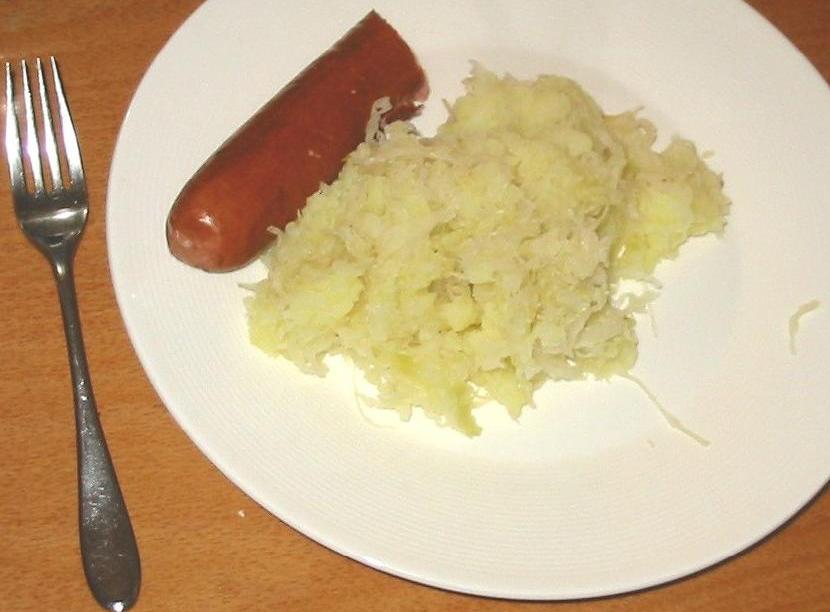
Raw Sauerkraut is used as a condiment, in salads and as a direct accompaniment to cooked dishes. Cooked Sauerkraut is prepared by braising it gently with fat (typically lard, goose fat or bacon), onions, a small amount of liquid (stock or wine), and seasonings. The cooking time is typically 30 to 60 minutes, during which the Sauerkraut softens and absorbs flavour from the fat and aromatics.
In Alsatian cooking — historically connected to the German tradition — the dish Choucroute garnie represents perhaps the most elaborate use of Sauerkraut: a large braised preparation of Sauerkraut cooked with white wine, juniper berries and bay leaves, served with multiple types of cured and cooked pork and sausages. Though Alsace is now part of France, its culinary tradition remains closely linked to the German side of the Rhine.
External References
- Bundeszentrale für Ernährung (BZfE) — German Federal Centre for Nutrition
- Slow Food Deutschland — documentation of traditional German food heritage